
 العربية
 Русский
 اردو
اردو
 中文
中文
 Français
Cyber Defamation in UAE: Penalties and Rights Protection
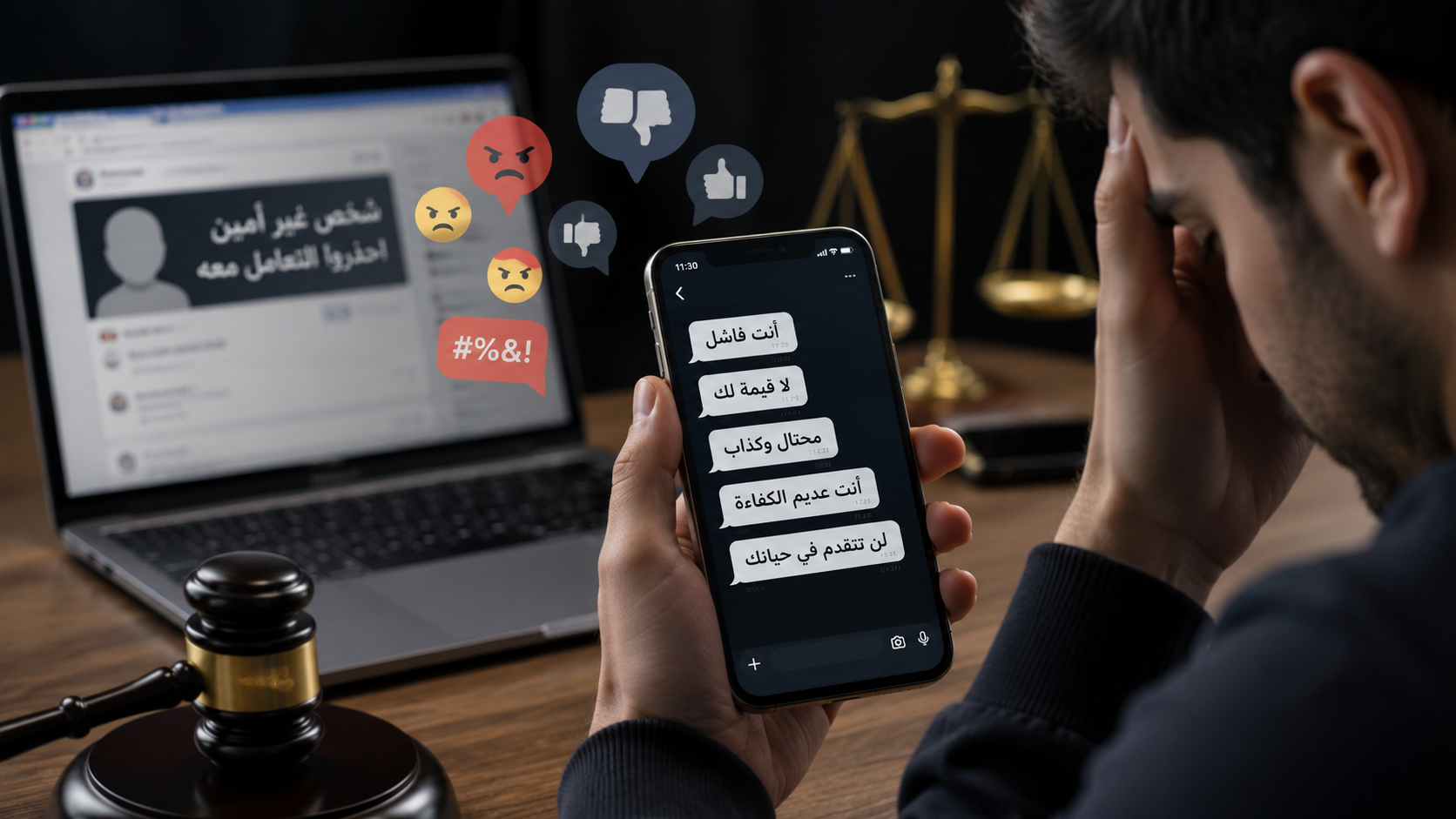
Cyber defamation in the UAE
Penalties and how to protect your rights
Social media and messaging apps have become arenas for crimes that are strictly punished by law, foremost among them being cyber defamation. A single word in a WhatsApp group or a comment on Instagram could lead to a criminal report and penalties including imprisonment and fines. UAE law in this regard is based on Federal Decree-Law No. (34) of 2021 on Combating Rumors and Cyber Crimes, and Federal Decree-Law No. (31) of 2021 on Crimes and Penalties.
Our office's team reviews in this article the key things you need to know if you are a victim or fear being accused.
First: What is the difference between defamation and slander?
| The crime | Definition | Example |
|---|---|---|
| Cyber defamation | Using phrases or words that insult a person or diminish their dignity through an electronic means | Sending a message containing an insult or derogatory description |
| Cyber slander | Attributing a specific incident to a person that could make them subject to punishment or contempt | Publishing an accusation of theft or betrayal without evidence |
Second: Means in which the crime occurs
Cyber crimes of defamation and slander include all information technology means, including:
- WhatsApp (private messages or groups).
- X platform (formerly Twitter), Instagram, Facebook, and TikTok.
- Email and text messages.
- Forums, websites, and article comments.
- Encrypted apps and other chat applications.
Third: Legal penalty
UAE law distinguishes between defamation in private space and public space, which is a fundamental distinction that affects the legal description and severity of the penalty.
| Case | Applicable article | Penalty |
|---|---|---|
| Defamation via WhatsApp (private chat or limited group) | Article 374 of the Penal Code | Imprisonment and/or fine |
| Defamation via a public platform or open information network | Cybercrime Law | Imprisonment and fine, and the penalty may be aggravated |
| Defamation against a public employee during the performance of their duties | Penal Code + Cybercrime Law | Aggravated penalty |
Fourth: How is the crime proven?
Investigative authorities and courts rely on digital evidence, the most prominent of which are:
- Screenshots documented with date and time.
- Copies of conversations or messages in full without truncation.
- Technical reports issued by technical investigative authorities.
- Public links and posts that can be officially documented.
Frequently Asked Questions
Is defamation via WhatsApp a crime in the UAE?
Yes. Defamation via WhatsApp is a punishable crime under Article (374) of the Penal Code as it is considered defamation via telephone, although it differs in its legal description from public defamation via open platforms. A complaint must be filed within three months from the date of knowledge of the crime.
Is a screenshot alone sufficient to prove the crime?
A screenshot is an important preliminary piece of evidence, but its evidential value depends on the possibility of verifying it and the absence of tampering. Digital evidence is usually subject to technical examination by the relevant investigative authorities. It is advisable to document the entire conversation in a way that shows its context and the identity of the sender.
Does a fake account prevent access to the perpetrator?
No. The competent authorities in the UAE have advanced legal and technical powers and procedures to uncover the identities of those who commit cybercrimes, even if they use fake accounts or aliases.
Can a complaint be withdrawn in defamation and slander cases?
Yes, in crimes that depend on a complaint from the victim — which is common in defamation and slander cases — it is permissible to withdraw the complaint before a final judgment is issued, resulting in the termination of the criminal case. Often, the withdrawal process is preceded by an amicable settlement between the parties.
Can compensation be claimed for electronic defamation and slander?
Yes. The victim has the right to claim civil compensation for material damages such as loss of work or clients, and moral damages such as psychological suffering and damage to reputation. This can be done in two ways: intervening as a civil claimant in the criminal case, or filing an independent civil compensation lawsuit.
Are messages in private WhatsApp groups considered a cybercrime?
Messages in closed WhatsApp groups are generally treated as slander via phone under Article (374) of the Penal Code, not as public electronic slander, because the group is not open to the general public. However, if the messages contain threats, extortion, or the dissemination of criminal content, the provisions of the Cybercrime Law may apply with harsher penalties.
What is the statute of limitations for defamation and slander cases?
A complaint for defamation and slander expires three months from the date the victim becomes aware of the crime and its perpetrator. Therefore, it is advisable to act immediately upon discovering the incident and not to delay filing the complaint.
Five practical steps if you are subjected to electronic defamation
- Document the evidence immediately:Keep screenshots and messages intact without deletion.
- Do not retaliate:Responding with similar abuse exposes you to legal accountability.
- Do not repost:Publishing offensive content may impose independent liability on you.
- Take the initiative to report:Remember that the complaint expires after three months.
- Consult a lawyer:To assess the incident and determine the correct legal description and appropriate procedures.
Summary
- Electronic defamation and slander is a crime punishable by imprisonment and fines regardless of the medium.
- WhatsApp is generally subject to criminal law, not cybercrime law — and the difference in punishment is substantial.
- A fake account does not protect the perpetrator from being revealed or prosecuted.
- The period for filing a complaint is only three months — delays will forfeit the right.
- The victim is entitled to civil compensation in addition to the criminal lawsuit.
If you are facing a case of electronic defamation or slander or need specialized advice, our office team is fully prepared to provide the necessary assistance.