 العربية
 Русский
 اردو
اردو
 中文
中文
 Français
National & General News
Mohammed bin Rashid and Hamdan bin Mohammed: 20 Years of Leadership Establishing Dubai's Global Leadership
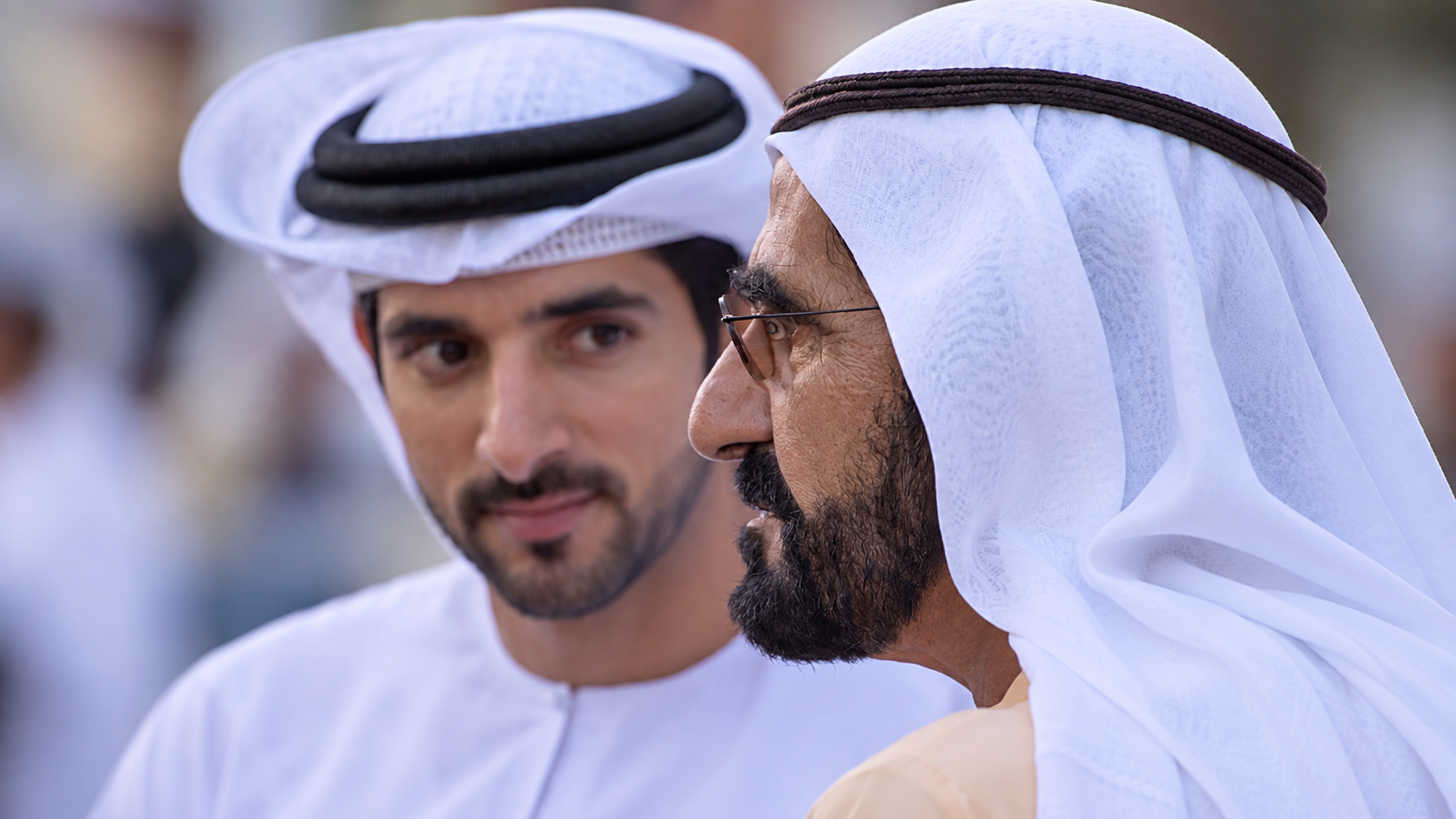
Over twenty years, and with an approach inspired by the vision of His Highness Sheikh Mohammed bin Rashid Al Maktoum, Vice President and Prime Minister of the UAE and Ruler of Dubai, His Highness Sheikh Hamdan bin Mohammed bin Rashid Al Maktoum, Crown Prince of Dubai, Deputy Prime Minister and Minister of Defence, and Chairman of The Executive Council of Dubai, has led a pivotal phase in the emirate's journey, during which vision was turned into policies, priorities into programmes and projects, and decisions into an impact felt by people and documented by global competitiveness indices.
Since assuming the chairmanship of The Executive Council in September 2006, His Highness has established a model of government work that links planning with execution, resources with priorities, and achievement with impact, while strengthening integration among entities in the spirit of one government. This approach has helped accelerate decision-making, direct capabilities towards the priorities with the greatest influence on Dubai's present and future, and build a flexible institutional system that responds to change, anticipates needs, and sustains the momentum of development.
Under the directives of His Highness Sheikh Hamdan bin Mohammed bin Rashid Al Maktoum, Dubai has witnessed qualitative transformations in the size of its economy, the efficiency of its infrastructure, the quality of its services, and its standing in international competitiveness indices. At the heart of this journey, people have remained both the starting point and the goal; economic growth, urban development, and global leadership are not separate ends but levers for building a safer, more stable, and more prosperous society, and for expanding opportunities for its members and future generations.
Over the past two decades, Dubai has established a development model that places people at the centre and purpose of its policies and programmes. Integrated efforts have raised the proportion of individuals who feel safe in Dubai to 99.9%, reflecting a high level of trust and reassurance in daily life.
This sense of safety is complemented by Dubai's achievements in community health, with healthy life expectancy reaching 80.75 years. These indicators reflect a broader concept of development that encompasses safety and the quality of the years a person lives in good health, able to participate and be productive, alongside access to essential services.
In education, Dubai ranked among the top five globally in a number of international educational assessments, confirming its advanced position in a sector directly linked to shaping the future. This progress gives the twenty-year journey a dimension that extends across generations, helping prepare students capable of dealing with a rapidly changing world and participating in an economy increasingly based on knowledge and skills.
Government services indicators present another picture of the impact of institutional development on people's lives; customer happiness with Dubai Government reached 95%. This level reflects the ability of government entities to turn policies and programmes into a service experience whose value customers can feel, and points to a shift in the concept of service from completing a transaction to building a journey that is more efficient, seamless, and connected to the individual's needs, time, and expectations.
In parallel, employee happiness in Dubai Government reached 89.3%, highlighting the importance of the human element within the government system. The government employee is the daily link between policies and society, and higher employee happiness supports performance quality, continuous development, and the ability to deliver services that meet customer aspirations. The combination of customer and employee happiness confirms that service quality and the work environment are two complementary tracks in Dubai's government model.
The priority given to people extended to providing the foundations of family stability through integrated housing solutions for citizens worth AED 50 billion over twenty years. This value reflects the scale of investment in one of the files most closely tied to family life and its future, as housing forms the basis of social stability and a lever for citizens' ability to build their lives and plan their children's future within an environment that meets their needs and aspirations.
At the level of social cohesion, Dubai has provided 27 majlises and community centres to strengthen communication and community participation among citizens. These majlises and centres play a role that goes beyond providing meeting places; they represent spaces for interaction, participation, and the strengthening of social bonds, and support continued direct communication among community members. Their spread embodies attention to the city's social fabric in parallel with the development of its urban and economic infrastructure.
Total green spaces reached 55.7 million square metres, affirming that Dubai's urban development goes hand in hand with providing an environment that supports residents' comfort and community wellbeing. These spaces reflect attention to the quality of the urban landscape and to building a city where people find room for life and activity, alongside the opportunities it offers for work and investment.
Together, these indicators form an integrated picture of the place of people in Dubai's model: safety that encompasses almost the entire community, health that supports a longer and more active life, education that competes globally, services that enjoy customer satisfaction, a government environment that motivates employees, housing solutions that strengthen citizens' stability, and community facilities that preserve communication and cohesion. Here the true impact of government decisions emerges, when they move from a text or a programme to tangible change in the details of life.
Alongside investment in people, Dubai has succeeded in building a pioneering and ambitious economic model; the size of the emirate's economy doubled over two decades to reach AED 937 billion in 2025, reflecting a continuous path of growth and its ability to consolidate its position on the global map of business, trade, and investment.
Foreign trade figures confirm the depth of the Dubai economy's connection to global markets, with its non-oil foreign trade exceeding AED 3 trillion. This figure embodies the emirate's role as a major hub for trade and the flow of goods, and its ability to leverage its infrastructure and international connectivity to expand economic partnerships and strengthen its presence in global supply chains.
These results derive their significance from the integrated environment whose foundations were laid by His Highness Sheikh Mohammed bin Rashid Al Maktoum, Vice President and Prime Minister of the UAE and Ruler of Dubai, and whose journey has been led by His Highness Sheikh Hamdan bin Mohammed bin Rashid Al Maktoum, Crown Prince of Dubai, Deputy Prime Minister and Minister of Defence, and Chairman of The Executive Council of Dubai, alongside his brother His Highness Sheikh Maktoum bin Mohammed bin Rashid Al Maktoum, First Deputy Ruler of Dubai, Deputy Prime Minister and Minister of Finance. The expansion of the economy has been tied to the quality of the city's system as a whole, and growth has become the outcome of multiple sectors working in one direction within a social and urban environment that supports its sustainability.
The real estate sector emerged as one of the main drivers of this activity, with the value of real estate transactions reaching AED 917 billion in 2025, reflecting strong demand for property assets and confidence in Dubai's future. This performance also confirms Dubai's attractiveness for living and investment, and the sector's ability to keep pace with economic and population growth and meet the needs of a city that continues to expand its global presence.
This growth was accompanied by a rise in total consolidated government spending to AED 1.2 trillion over 20 years, covering the various key and vital sectors. This expansion indicates the growing ability of the government to fund priorities, develop services and infrastructure, and keep pace with the needs of a city whose economic, population, and tourism presence continues to increase. It also reflects the role of government investment in creating the environment needed for continued development and stimulating activity across sectors.
Dubai's international appeal is embodied in the choice of 20 million tourists annually to make it their destination, a renewed testament to its ability to attract visitors from around the world and support the tourism, hospitality, transport, and services sectors. This figure also reflects global confidence in the Dubai experience as an accessible, diverse, highly efficient, and ever-renewing city.
In infrastructure, the total length of the road network reached 25,974 lane-kilometres, an extent that strengthens connectivity between the emirate's areas and facilitates the movement of residents, visitors, and supply chains. The value of the road network goes beyond its engineering dimensions; it shortens distances, connects communities with workplaces and services, supports trade and supply chains, and gives urban and economic growth more flexible and smoother pathways.
These results outline the features of an economy that rests on a strong urban and governmental base: continuous growth in size, expanding non-oil foreign trade, a real estate sector that consolidates investor confidence, government spending that keeps pace with expansion, a road network that supports mobility, and a tourism sector that attracts millions of visitors. Together they reveal Dubai's ability to combine strong economic activity, efficient infrastructure, a high-quality human experience, and broad openness to the world.
In the same context, Dubai has translated its domestic achievements into a prominent presence in international indices, advancing in fields that reflect the diversity of its model and the strength of its pillars. In aviation, Dubai International Airport ranked first globally as the busiest airport for international passengers, confirming the emirate's role as a global gateway and a link between cities, markets, and cultures.
This excellence is inseparable from Dubai's tourism and economic standing; extensive international air traffic strengthens the city's ability to attract visitors, investors, and talent, and supports its connection to business hubs around the world. Ease of access is also a fundamental part of its competitive advantage, giving its various sectors greater capacity to grow and connect with international markets.
In investment, Dubai ranked first globally in attracting greenfield foreign direct investment projects, a position that reflects investors' confidence in its environment and its ability to turn opportunities into projects. It also ranked first globally for the fourth consecutive year in attracting foreign investment projects in the cultural and creative industries, highlighting the breadth of its appeal to sectors based on ideas, talent, and creativity.
Excellence in the cultural and creative industries carries particular significance for the diversity of Dubai's economy; the city attracts not only capital but also projects linked to knowledge, content, culture, and innovation.
In the urban landscape, Dubai ranked first globally as the cleanest city in the world in the Global Power City Index for the sixth consecutive year. This position reflects the level of care for the environment and the quality of related services, and adds an important element to the experience of residents and visitors.
In the financial sector, Dubai ranked first regionally and among the top 10 in the Global Financial Centres Index. This position confirms its weight in finance and business and its ability to compete among the most prominent international centres. It also supports its role as a platform linking regional opportunities with global markets, and complements its achievements in attracting foreign direct investment projects.
On the path of digital transformation, Dubai achieved second place globally in the Smart City Index, thanks to the use of technology to develop services and facilitate doing business. This position reflects an approach that makes technology a means of achieving practical results, whether by improving the customer experience, raising performance efficiency, or providing a more flexible environment for the business community.
Dubai continues its journey with an approach that puts people first, makes a strong economy a tool for expanding opportunities, and treats global leadership as the outcome of integrated work. Between safety and stability, education and health, housing and services, infrastructure and investment, the story takes shape of a city that turned vision into reality and made the quality of execution the measure of a decision's value and impact.
Source: Emirates News Agency (WAM)