 العربية
 Русский
 اردو
 中文
 Français
Real Estate
Refund from the Real Estate Developer: I Paid but Didn't Sign the Contract

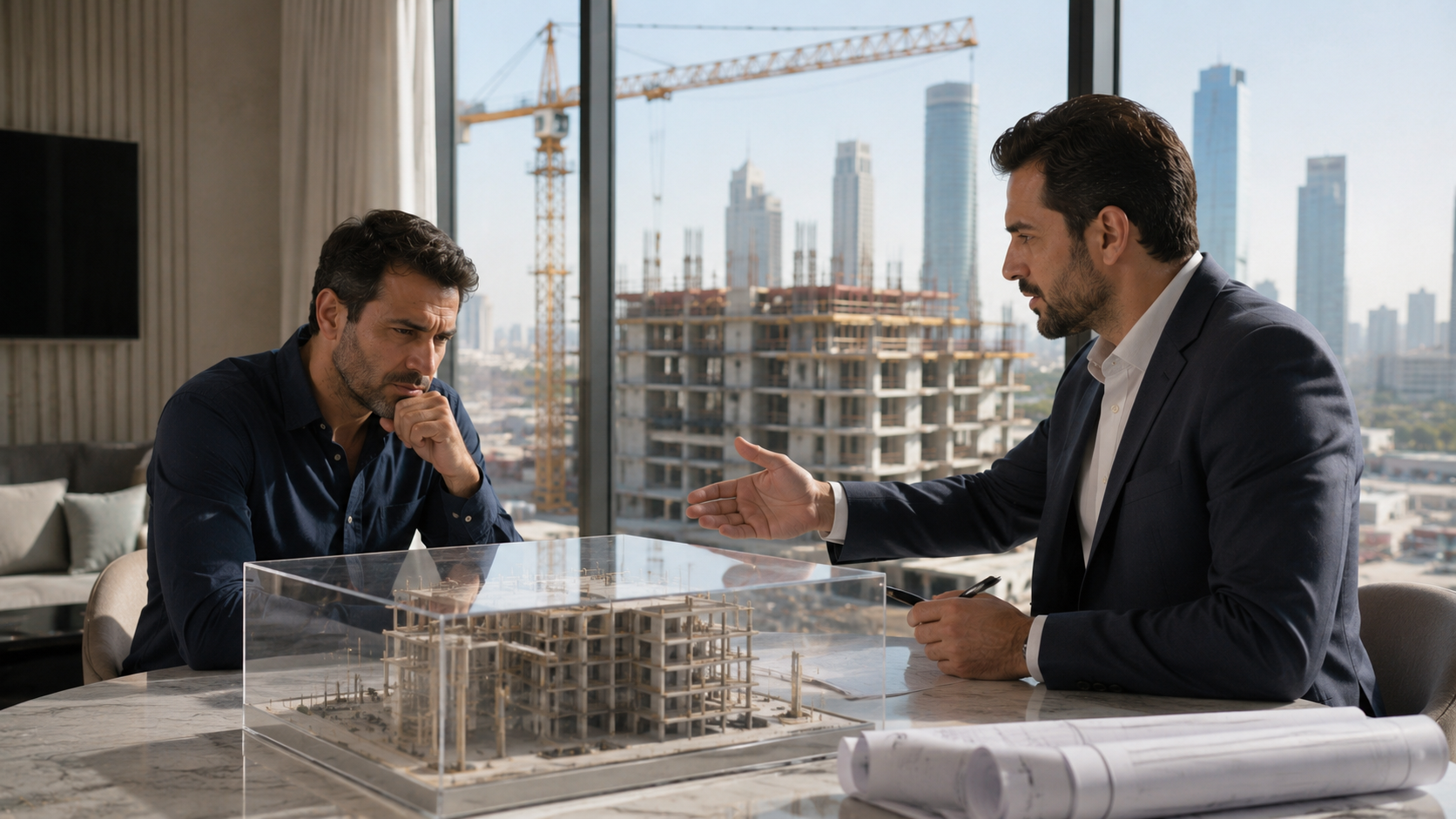
A refund from a real estate developer in Dubai and the other emirates is possible in most cases, whether you paid and the sale contract was never signed, the developer delayed handover, or the project was cancelled. But the outcome is not the same for everyone, and in Dubai the path usually starts at the Dubai Land Department and may end before the courts. Three things determine your position: the emirate where the property is located, whether the property is completed or still under construction, and who actually caused the sale not to go through. These factors can turn the result from a full refund into the loss of part of your money. That is why the first step in claiming a refund from a real estate developer is not an angry message, but defining your legal position precisely before you act, and this is what the firm does when it reviews your documents.

Can I get my money back if I never signed the contract?
The starting point is that money paid without a legal basis must be returned. If no sale contract was concluded between you and the developer, what you paid remains in its hands for nothing in return, and the rules of the Civil Transactions Law require the return of what was received without right. Here, a refund from the real estate developer is a direct claim that does not depend on proving fault by anyone.
But note a point many people miss: signing a paper called a “contract†is not always a condition for a contract to exist. An agreement may be formed through the reservation form, the correspondence and the payment, and then the rules change completely. The common belief that the amount paid is a “deposit you can walk away from†is also not always correct in the UAE, as we explain in detail in Refunding the Deposit After Withdrawing from Purchase in the UAE.
In practice, the strongest ground for the claim is that the offer did not match the acceptance: the draft contract sent to you came with terms that differ from what was agreed on area, price, payment schedule or handover date. If that is proven, there is no contract at all and the amount comes back in full.
Completed property or under construction? The difference that changes the outcome
This is the question we start every file with, because the real estate development laws of the UAE were written mainly for off-plan sales. If the unit is completed, the file leaves that system and returns to the general rules and the property registration laws.
There is also a middle situation where many disputes arise: a project that has received its completion certificate while the unit has not yet been registered in the buyer’s name. Protection erodes gradually as the escrow account closes while the regulatory restrictions remain, and this is the worst moment to delay acting.
The law differs from one emirate to another
No single federal law governs this issue. Each emirate has its own real estate legislation, and each has its own deadlines, percentages and competent authority. An answer that is right for a property in Dubai may be entirely wrong for a property in Ajman. We set out the full picture of these disputes in Real Estate and Contracting Issues in the UAE.
When do you recover the full amount?
There are cases in which the refund from the real estate developer is complete, with no deduction, because the sale itself has no sound basis:
The project is not registered or not approved
The real estate laws of the UAE provide that sales of units in a project that is not registered with the competent authority, or that has not obtained its approvals, are void, and voidness requires the return of what was paid.
The disposition was not entered in the dedicated register
An off-plan sale that is not entered in the interim register does not produce its effect, and in some emirates it is expressly void.
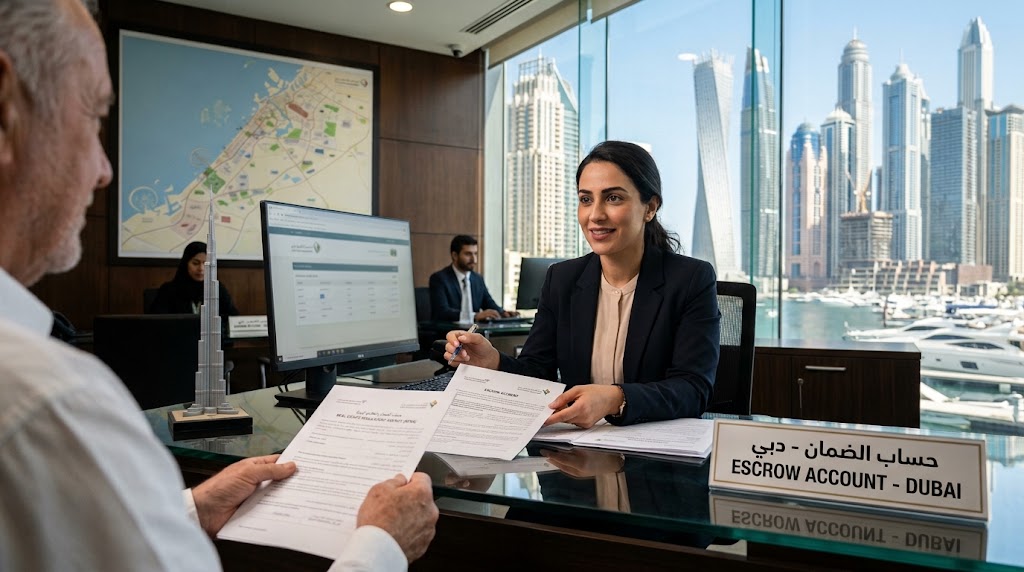
The amount was received outside the escrow account
Receiving the price of the unit in the developer’s personal or commercial account instead of the project’s escrow account is a clear violation that reverses the developer’s position in negotiation and in court.
The project was cancelled
If the project is cancelled by a decision of the competent authority, the developer must return everything it received from the buyers.
This is why our work always begins with checking the project’s status with the Department before drafting any demand, because the result of that check alone may turn the file from a negotiation over a percentage into a claim for the full amount.
When do you lose part of your money?
The picture is not always in the buyer’s favour, and frankness is more useful than reassurance. Where the facts are characterised as a breach by the buyer, the real estate laws allow the developer to take specific procedures that end in deducting a percentage of the amounts paid or of the unit’s value, and that percentage rises with the project’s completion percentage. In some cases the buyer recovers nothing if what was paid is small compared with the value of the unit.
You may also lose your right to the reservation amount if you delay signing the sale contract, after receiving it, beyond the period set by law. Silence and waiting are therefore the most dangerous thing you can do, because the deadlines run against you while you believe you are preserving your right.
It is important to know that these procedures do not prevent you from going to court or to arbitration if the developer abuses its powers, and that any contract term that contradicts the law is void even if you signed it.
Refund after signing the contract: delay, cancellation and breach
Not every refund claim against a real estate developer arises from a contract that was never signed. Many buyers signed the sale contract and had it registered in their name, and then the developer delayed handover substantially, changed the unit’s specifications or area without their consent, or the project stopped or was cancelled. The basis of the claim changes here: the amount is not claimed because no contract was formed, but through termination of the contract for the developer’s breach and return of what was paid, with compensation if loss is proven.
The common mistake is for the buyer to stop paying or to declare termination unilaterally, turning from the party with the right into a party in breach whose money is deducted. Whether a breach is material, and what follows from it, is decided by the competent authority on the basis of the contract, the completion percentage and the correspondence, not on the buyer’s impression. That is why the firm reviews the contract, the payment schedule and the project’s status before choosing the route: specific performance, termination and refund, or settlement. We cover this situation in detail in Buyer Rights in Off-Plan Sales Disputes in Dubai.
Short deadlines that cannot wait
15
days
The period some real estate laws give the buyer to withdraw after reservation, and also the period for concluding the sale contract after the reservation form is signed. Missing it changes your legal position entirely.
30
days
The period given to the buyer to perform after being notified through the competent authority; once it expires, the developer begins its procedures.
60
days
The period within which the developer must return what exceeds the deduction percentage after reselling the unit to another buyer; in other cases it extends to a full year from the date of termination.
What should you do now? Practical steps
Documents
Gather your papers before any correspondence
The receipt or transfer slip, the reservation form if any, all correspondence including WhatsApp messages and emails, and the draft contract that was sent to you. If you hold no written document, the matter is not hopeless, as evidence can be built from other sources.
Assessment
Define your legal position
Are you a party to a reservation, a buyer under an unregistered contract, or a person who paid an amount without legal basis? This characterisation determines the provision you rely on and the authority you approach, and any error in it weakens the claim from the start.
Demand
Send a notarised legal notice with a fixed deadline
The notarised notice ends any argument over the date, records your demand and opens the way to claiming interest and compensation. Its wording differs fundamentally depending on the characterisation reached in the previous step.
Complaint
Approach the competent real estate authority
The land and real estate regulatory departments in the UAE have real supervisory powers over developers and escrow accounts, and many files are resolved at this stage without entering the court.
Litigation
File the claim with the right requests
A claim for the refund, interest, compensation and costs, or for completion of the sale if that serves you better. Defining the requests and the forum competent to hear the dispute is handled by the firm according to the facts and documents of the file.
Advice that protects you before you pay
Do not pay before you verify
Ask for the project registration number and the escrow account number, and verify both with the real estate department of the emirate. A minute of checking may save you a year of litigation.
Transfer only to the escrow account
Any transfer to another account weakens your position and exposes your money to the developer’s creditors.
Read the contract before signing
You have the right to see the terms of the sale contract and a reasonable time to review it. Do not accept being rushed into signing and then having the delay counted against you.
Watch the broker
The broker’s commission is not deducted from the price of the unit, and documenting the broker’s role and what was promised in writing strengthens your position in a dispute.
Do not stop paying on your own initiative
Stopping instalments without a legal basis turns you from a creditor into a party in breach and gives the developer exactly what it was looking for.
Legal references
Ajman Law No. 2 of 2020 on the regulation of real estate development
Ajman Law No. 3 of 2023 on real estate registration
Dubai Law No. 13 of 2008 regulating the interim real estate register in the Emirate of Dubai
Dubai Law No. 9 of 2009 amending certain provisions of Law No. 13 of 2008
Dubai Law No. 19 of 2017 amending certain provisions of Law No. 13 of 2008
Dubai Law No. 8 of 2007 on escrow accounts for real estate development in the Emirate of Dubai
Abu Dhabi Law No. 3 of 2015 regulating the real estate sector
Federal Decree-Law No. 25 of 2025 issuing the Civil Transactions Law
Federal Decree-Law No. 35 of 2022 on evidence in civil and commercial transactions
Federal Decree-Law No. 42 of 2022 issuing the Civil Procedure Law
Frequently asked questions

Dubai
AWADH ALMHEIRI LAW FIRM AND LEGAL CONSULTATIONS acts in real estate disputes in Dubai, including refunds from real estate developers in Dubai, recovery of the first payment and the reservation amount, off-plan sale disputes, termination of the contract with the developer, compensation claims and complaints before the Dubai Land Department. If you are looking for a Law Firm in Dubai focused on real estate cases, we handle the file from the initial review through to enforcement.
Other emirates
We handle refund claims against real estate developers in Abu Dhabi, Sharjah, Ajman, Umm Al Quwain, Ras Al Khaimah and Fujairah, taking into account the different real estate legislation and competent authority in each emirate, whether the property is completed or under construction.