 العربية
 Русский
 اردو
 中文
 Français
Real Estate
Real Estate and Contracting Issues in the UAE

Real estate and construction cases in the UAE usually begin with a document signed in a hurry or a payment made before the contract was complete: a unit reserved off-plan followed by a developer’s delay, money paid with nothing registered in return, a contractor who stopped work before handing over the villa, or a defect that appeared years after handover. The direct answer is that these cases are decided by what is registered and documented: the entry with the land registry, the escrow account, the signed contract, the handover reports and the technical expert reports.
This guide sets out real estate and construction cases in the UAE in the order the client lives them: checking the property and the contract before buying, recovering payments from the developer, off-plan disputes, registration and transfer of title, jointly owned property, then construction disputes, defects and the decennial liability, through to the judgment and its enforcement.
All the articles in this area are gathered in the Real Estate, Development and Construction category, and AWADH ALMHEIRI LAW FIRM AND LEGAL CONSULTATIONS represents owners, buyers, developers and contractors in Dubai and across the other emirates.

What falls within real estate and construction cases?
Real estate cases in the UAE are not limited to a dispute between a seller and a buyer. They include sale, purchase and registration disputes, off-plan claims against developers, jointly owned property and service charge disputes, construction contract disputes between employer and contractor, claims for latent defects and the decennial liability, and holiday home violations. Disputes between landlord and tenant have their own competent authority and a separate path, explained in our rental disputes guide.
Each emirate has its own laws on real estate registration and development, while the federal Civil Transactions Law remains the general reference for sale, construction and warranty contracts.
Before you buy: what to check in the property and the contract
Most real estate cases could have been avoided with a simple check before signing: confirming the registered owner and that the property is free of any mortgage or attachment, that the off-plan project is registered with an approved escrow account, and that the area permits ownership by non-nationals if the buyer is a foreigner. Then read the handover, payment and termination clauses.
Anyone buying property outside the UAE, in Morocco for example, is subject to the law, procedures and taxes of the country where the property is located and needs an independent check there before making any payment.
Read more in:
What Foreigners Should Know Before Buying Property in Dubai
What Foreigners Should Know Before Buying Property in Morocco
What Has Changed in Morocco's Property Purchase Law as of July 2026?
I paid the developer but the contract was never signed: can I get the money back?
One of the most common situations is a buyer who pays a reservation amount or a first instalment, then the signing of the sale contract stalls and the developer refuses to return the money, claiming the buyer withdrew. What matters is why the contract was not signed: did the buyer refuse without justification, did the developer fail to offer a contract matching what was agreed, or was the project not registered at all? Each situation has its own answer, and the buyer may be entitled to recover everything paid if the failure lies with the developer.
The path usually starts with a written demand that preserves the right and fixes the date, then a complaint to the regulator or a claim in court depending on the emirate and the nature of the project.
Read more in:
Refund from the Real Estate Developer: I Paid but Didn't Sign the Contract
Refunding the Deposit After Withdrawing from Purchase in the UAE
Off-plan sales: developer delay and buyer default
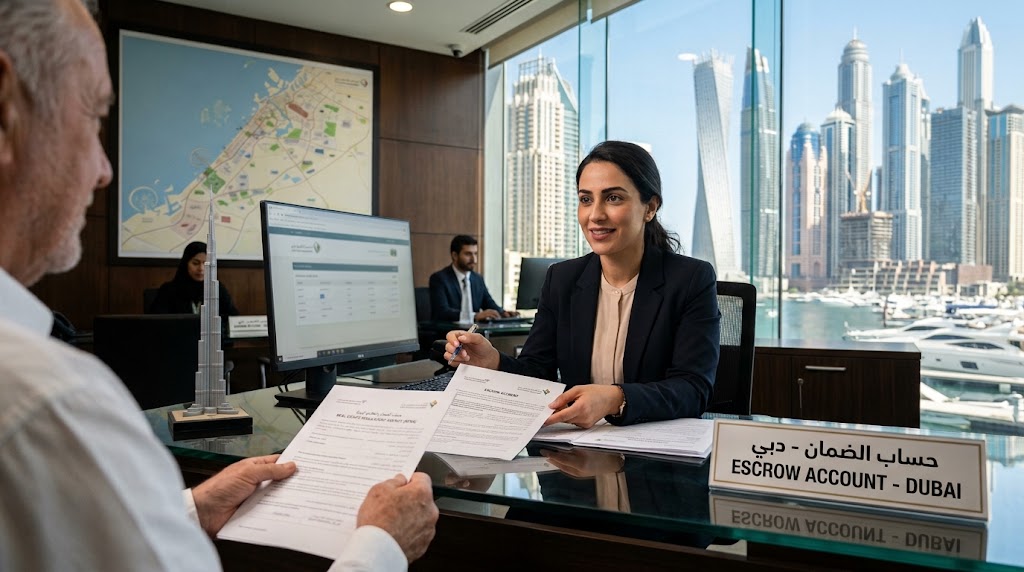
In off-plan sales in Dubai, buyers’ payments are deposited in an escrow account dedicated to the project, from which the developer may draw only in line with construction progress; this account is the buyer’s most important safeguard. If the developer misses the handover date or the project stalls, the buyer may, depending on the contract and the legislation, claim handover or termination and a refund of what was paid, with compensation for the loss.
The reverse situation is just as common: a buyer falls behind on instalments and the developer terminates the contract and keeps part of the amounts paid. The developer cannot act as it pleases here: Dubai law ties what it may retain to the project’s completion percentage and to specific notice procedures, and any excess can be challenged.
Complaint against a developer: the regulator or the court?
Many people go straight to court, even though some disputes with developers first pass through the real estate regulator of the emirate, such as the Real Estate Regulatory Agency of the Dubai Land Department, which receives complaints about projects and escrow accounts and verifies completion percentages. The regulator’s position on the project is often important evidence if the dispute reaches the courts. Termination, refunds and compensation, however, are matters for the competent court.
Property registration and transfer of title
In Dubai, ownership of property does not pass, and cannot be relied on against third parties, until it is registered with the Dubai Land Department, and the same applies in the other emirates with their land registration authorities. Buying under an unregistered contract, or paying the price before confirming the property is free of any mortgage, opens the door to disputes that are hard to resolve: a seller who sells the same property twice, a bank that holds on to its mortgage, or heirs who object to a sale that was not registered before death.
Jointly owned property and service charges
In towers and communities, a particular kind of dispute arises between owners and the owners’ association or the community manager: service charges the owner considers excessive or unjustified, faults in common areas that nobody repairs, and decisions affecting the use of the unit. In Dubai, the jointly owned property law governs this relationship, and service charges are subject to approval by the regulator rather than to the developer’s discretion alone.
Read more in:
Common Real Estate Issues in Dubai and How to Protect Your Rights
Real Estate Disputes in the UAE: Key Challenges and Solutions
Construction contracts: delay, stoppage and the absconding contractor
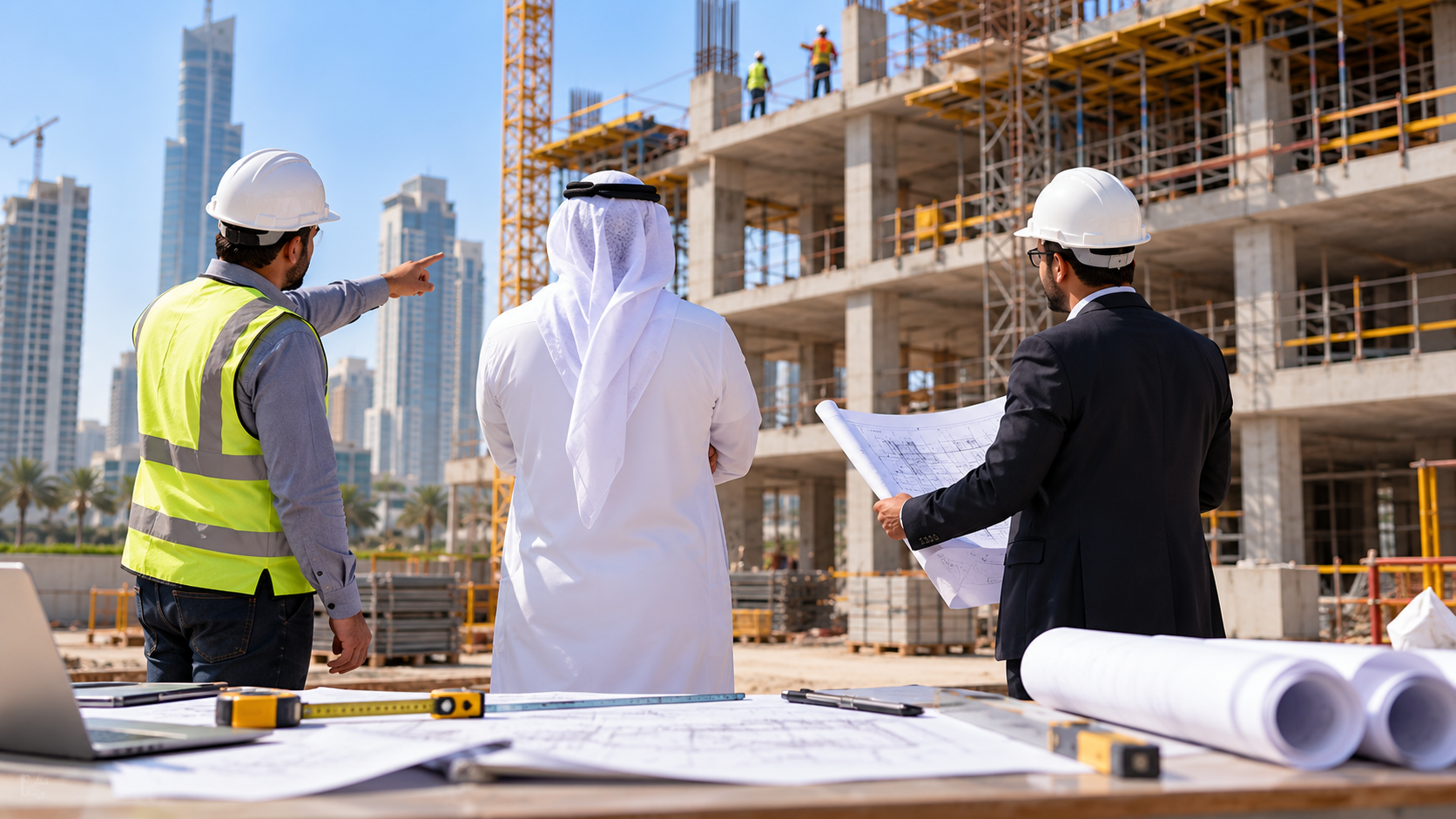
Construction disputes are among the most costly real estate cases, because the loss grows with every day the building stands still. The most common forms are a contractor overrunning the completion period, works carried out contrary to the drawings and specifications, claims for variations that were never agreed, or a contractor who stops and disappears before finishing the villa or project.
The common mistake by the employer is to bring in a new contractor straight away, losing the chance to prove the state of the works the first contractor left behind. The right course is to start with a formal notice, then establish the condition of the site through a technical expert who determines the completion percentage, the value of what was done and what is needed to finish, then complete the building and claim the difference and compensation.
Read more in:
Latent defects and the decennial liability
The liability of the contractor and the engineer does not end when the building is handed over. The Civil Transactions Law makes them jointly liable for the total or partial collapse of the building and for defects that threaten its stability and safety for ten years from handover, known as the decennial liability, and it cannot be excluded by agreement. Other finishing and workmanship defects are governed by the contract and the rules on warranty against defects.
FIDIC contracts in major projects
Major construction projects often use one of the FIDIC contract forms, which are not law but international model contracts adopted by the parties. Their clauses apply insofar as they do not conflict with the mandatory rules of UAE law, such as the decennial liability. Most of their disputes concern notices, extension of time and additional cost claims, and many are referred to arbitration where the contract so provides.
Disputes over the construction of citizens’ homes in Dubai
The construction of citizens’ homes in Dubai has its own dispute resolution path between the citizen and the contractor or consultant, beginning with amicable settlement and then a committee specialised in construction disputes, with its own deadlines and means of appeal, distinct from the path for ordinary construction disputes. Knowing this path from the start avoids filing a claim before the wrong body.
Read more in:
Construction Disputes of Citizens' Homes in Dubai: Jurisdiction, Deadlines, and Appeal Methods
Holiday homes and short-term letting
Letting a unit as a holiday home in Dubai is an activity that requires a permit from the Department of Economy and Tourism and compliance with its rules; it is not an ordinary lease governed by the rental law. Anyone who lets a unit by the night or the week without a permit exposes themselves to violations and fines.
Read more in:
Holiday Homes in Dubai: Your Comprehensive Guide to Licensing, Permits, Fees, and Violations
Holiday Homes: Organizing Your Permit and Contracts Early Avoids Most Issues
From judgment to enforcement in real estate cases
A judgment in your favour in a real estate case is not the end of the road. If the judgment awards money, an execution file is opened in which the judgment debtor’s funds, accounts and properties can be attached and a travel ban requested subject to its conditions. If it orders the handover of a unit or a transfer of title, it is enforced through the court in coordination with the land registration authority.
Read more in:
Enforcement of Judgments and Travel Bans in the UAE
Suspension of Execution and Annulment of Executive Document in the UAE
Real estate and construction cases before the Dubai Courts
Dubai is the largest real estate market in the UAE, so most real estate and construction cases are concentrated there. The Dubai Courts hear these cases through circuits specialised in real estate disputes, which may be preceded by amicable settlement or conciliation depending on the type and value of the dispute, while the Dubai Land Department and the Real Estate Regulatory Agency handle the regulatory side. Anyone looking for a real estate lawyer in Dubai needs someone who understands this interplay and knows when to start with the regulator and when with the court.
Read more in:
The Best Real Estate Lawyer in Dubai? Practical Selection Criteria
Law Firm in Dubai: Comprehensive Legal Services for Individuals and Companies
What to prepare before consulting a real estate lawyer
Contract
The contract and its annexes
The sale, reservation or construction contract with all its annexes and drawings, and the title deed or proof of registration if any.
Payments
What you paid and how
Payment receipts, transfer statements and cheques, showing what was paid into the escrow account and what was paid outside it.
Correspondence
Correspondence and notices
Messages, emails and notices exchanged with the developer, contractor or seller, arranged by date.
Technical
Condition of the property or project
Site photographs, the consultant’s reports or any technical report on the completion percentage or defects, and the handover report if any.
How to verify a lawyer’s licence in Dubai
A lawyer appearing before the Dubai Courts must be enrolled with the Government of Dubai Legal Affairs Department, and you can check the enrolment through the Department’s website. Federal Decree-Law No. 34 of 2022 regulates the legal profession and legal consultancy and distinguishes between law firms licensed to appear before the courts and legal consultancy offices that may not.
Power of attorney and the firm
Ask to see the firm’s licence and the enrolment of the lawyer who will handle your case, and make sure the power of attorney is in the name of the licensed lawyer or firm, not an intermediary.
Legal references
Federal Decree-Law No. 25 of 2025 issuing the Civil Transactions Law
Federal Decree-Law No. 42 of 2022 issuing the Civil Procedure Law
Federal Decree-Law No. 34 of 2022 regulating the legal profession and legal consultancy
Dubai Law No. 7 of 2006 concerning real property registration in the Emirate of Dubai
Dubai Law No. 8 of 2007 concerning escrow accounts for real estate development in the Emirate of Dubai, as amended
Dubai Law No. 13 of 2008 regulating the interim real property register in the Emirate of Dubai, as amended
Dubai Law No. 6 of 2019 concerning jointly owned property in the Emirate of Dubai
Abu Dhabi Law No. 3 of 2015 regulating the real estate sector in the Emirate of Abu Dhabi

Frequently asked questions about real estate and construction cases in the UAE
Real estate lawyer in Dubai
AWADH ALMHEIRI LAW FIRM AND LEGAL CONSULTATIONS provides real estate lawyer services in Dubai in real estate and construction cases: recovering payments from developers, off-plan disputes, complaints against developers before the Real Estate Regulatory Agency, property registration and transfer of title, jointly owned property disputes, and construction and decennial liability cases before the Dubai Courts.
Real estate cases in the other emirates
The firm also handles real estate and construction cases in Abu Dhabi, Sharjah, Ajman, Umm Al Quwain, Ras Al Khaimah and Fujairah, before the courts and the real estate registration and regulatory authorities of each emirate, from reviewing the contract before signing to enforcing the judgment.