 العربية
 Русский
 اردو
اردو
 中文
中文
 Français
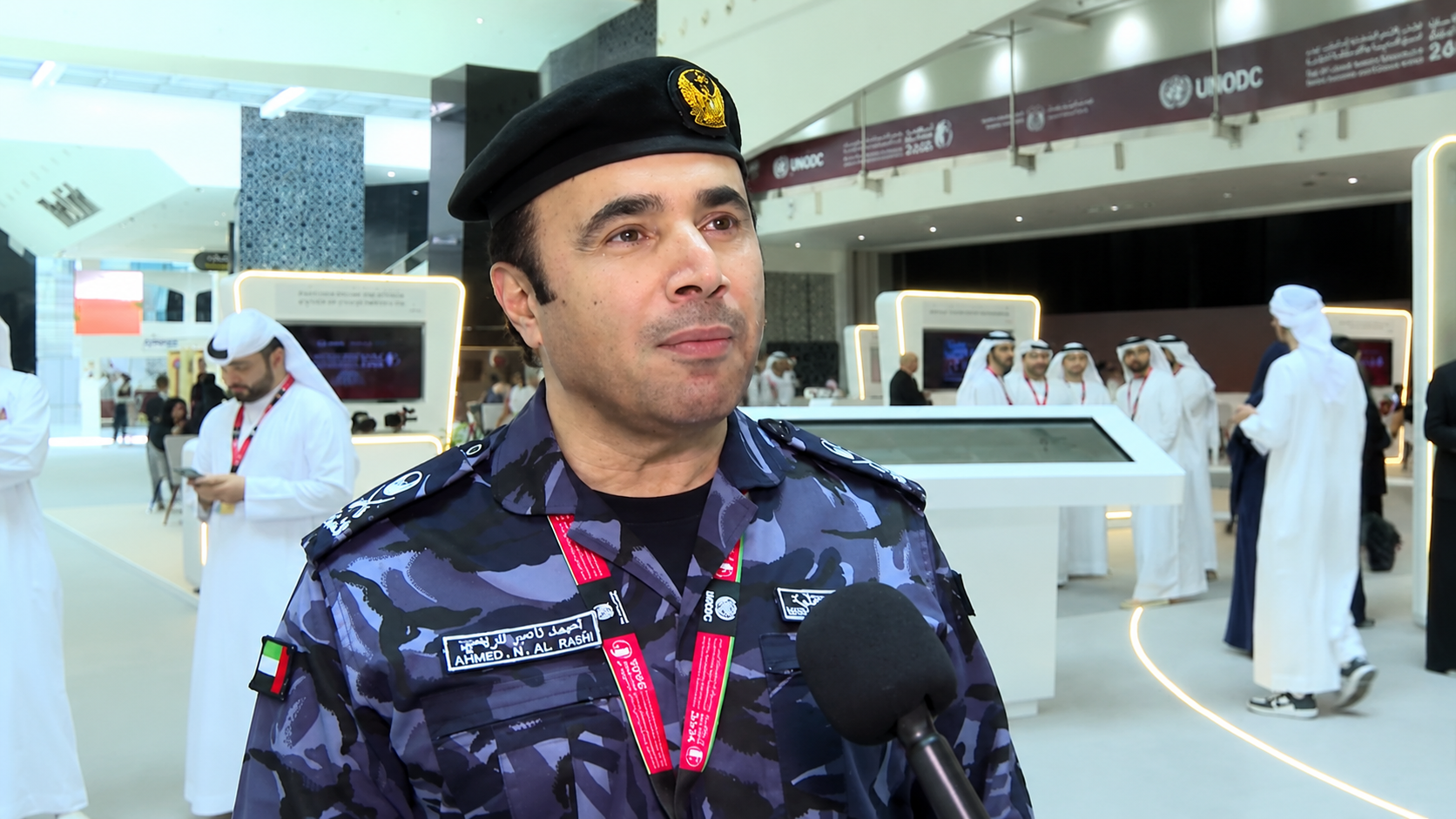
Justice Minister: UAE Establishes Comprehensive International Judicial Cooperation System to Prevent Evasion of Justice
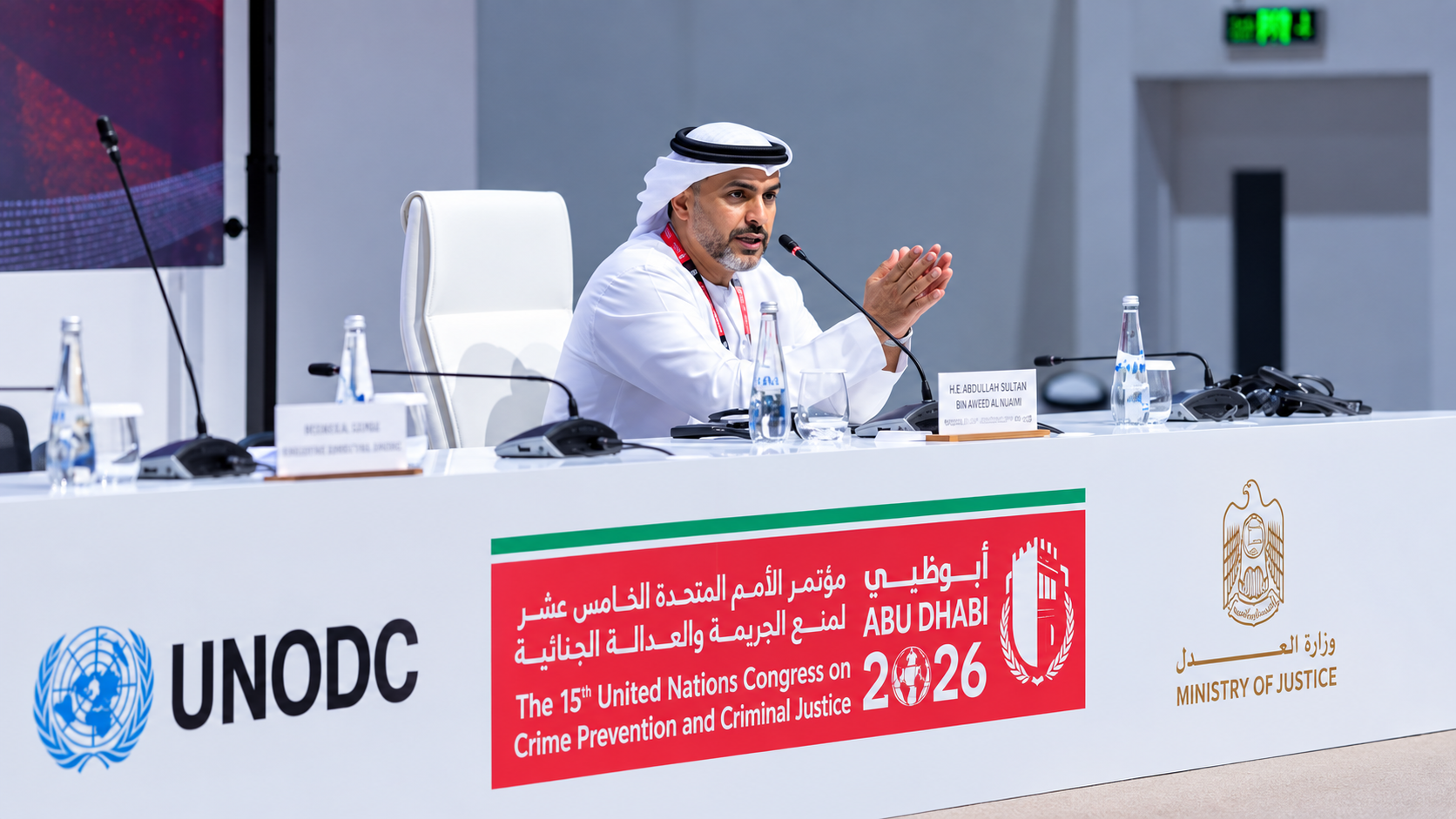
His Excellency Abdullah Sultan bin Awad Al Nuaimi, Minister of Justice and Chairman of the Federal Judicial Council, affirmed that the UAE has established an integrated system of international judicial cooperation that combines legal frameworks, direct partnerships, rapid response and digital transformation, preventing borders from being exploited to evade justice or to shield the proceeds of crime.
He made the remarks during the thematic meeting “Strengthening International Judicial Cooperation: The UAE Experience and Global Partnerships”, held as part of the high-level segment of the Fifteenth United Nations Congress on Crime Prevention and Criminal Justice – Abu Dhabi 2026, which continues with broad international participation until 1 October in the capital, Abu Dhabi.
The Minister said that crime today recognises no borders, as criminals, assets, funds and evidence move across multiple jurisdictions, so no state can confront transnational crime alone. He stressed that the UAE’s message is clear: borders must not become a shield protecting criminals or criminal assets.
The aim is to ensure that the proceeds of crime are traced, frozen, seized and recovered through well-established judicial procedures that respect the rule of law, and he described international judicial cooperation as a partnership between states built on trust, direct communication, swift action and practical solutions.
He explained that the UAE’s approach rests on accelerating international cooperation and raising its efficiency, strengthening direct communication with central authorities, developing asset recovery, building long-term international judicial partnerships, and ensuring that procedures remain consistent with the rule of law.
The legal framework for cooperation
The Minister reviewed the legal framework for international judicial cooperation, based on multilateral and bilateral agreements and national legislation, noting that the UAE is a party to 16 global and regional conventions and has concluded more than 140 bilateral agreements in force with 53 countries, covering extradition, mutual legal assistance, the freezing and confiscation of assets, the gathering of evidence and the transfer of sentenced persons.
He noted that around 30% of the bilateral agreements were signed in the past five years, while four agreements are ready for signature before the end of the year, two are under negotiation and eight are at the drafting stage.
He added that federal legislation provides a strong basis for cooperation, including in combating money laundering, the financing of terrorism and the financing of proliferation, and that the UAE applies the principle of reciprocity where no agreement exists.
He affirmed that effective cooperation begins with integrated national coordination between federal and local prosecution offices and courts and the Ministries of Foreign Affairs and Interior, alongside cooperation with central authorities, judicial bodies and international organisations, noting that in 2026 the UAE has held more than 35 bilateral meetings with counterpart central authorities around the world.
Judicial cooperation in numbers
Mutual legal assistance requests rose by 244% between 2021 and 2025, and extradition requests by 235%.
576 extradition requests received in 2025, with court decisions issued in 178 of them, 547 mutual legal assistance requests, and 710 follow-up reminders sent to complete missing information.
5 days is the average time to carry out voluntary surrender, and 35 days to execute a complete mutual legal assistance request, compared with an international guideline of 60 to 180 days.
The fully digital ICAS system has cut some procedures from 7 days to 5 minutes and reduced staff effort by about 80%.
The Minister explained that this growth in incoming requests reflects the confidence of international partners in the UAE’s legal and judicial system, and that the International Cooperation Assistance System (ICAS) has also improved some procedures by up to 90%.
Practical examples
He highlighted cooperation with the Republic of Ireland, in which UAE authorities arrested Daniel Kinahan, a prominent leader of the Kinahan organised crime group, within 48 hours of receiving the extradition request.
The case then underwent full judicial review, concluding with a final ruling by the Dubai Court of Cassation, before the extradition was carried out on 9 August 2026.
He also referred to judicial cooperation with France in a case involving four individuals, which led to assets being identified and traced and 82 properties being seized in the UAE in November 2025, after the request was executed through the Dubai Public Prosecution.
The Minister concluded by affirming that the UAE will continue to expand its network of agreements, deepen its legal and judicial partnerships, accelerate the exchange of information and evidence and develop digital tools, reinforcing its position as a trusted global partner in combating organised and transnational crime and in promoting justice and the rule of law.
Source: Emirates News Agency (WAM)