 العربية
 Русский
 اردو
اردو
 中文
中文
 Français

Intellectual Property
Intellectual Property and Trademarks in the UAE

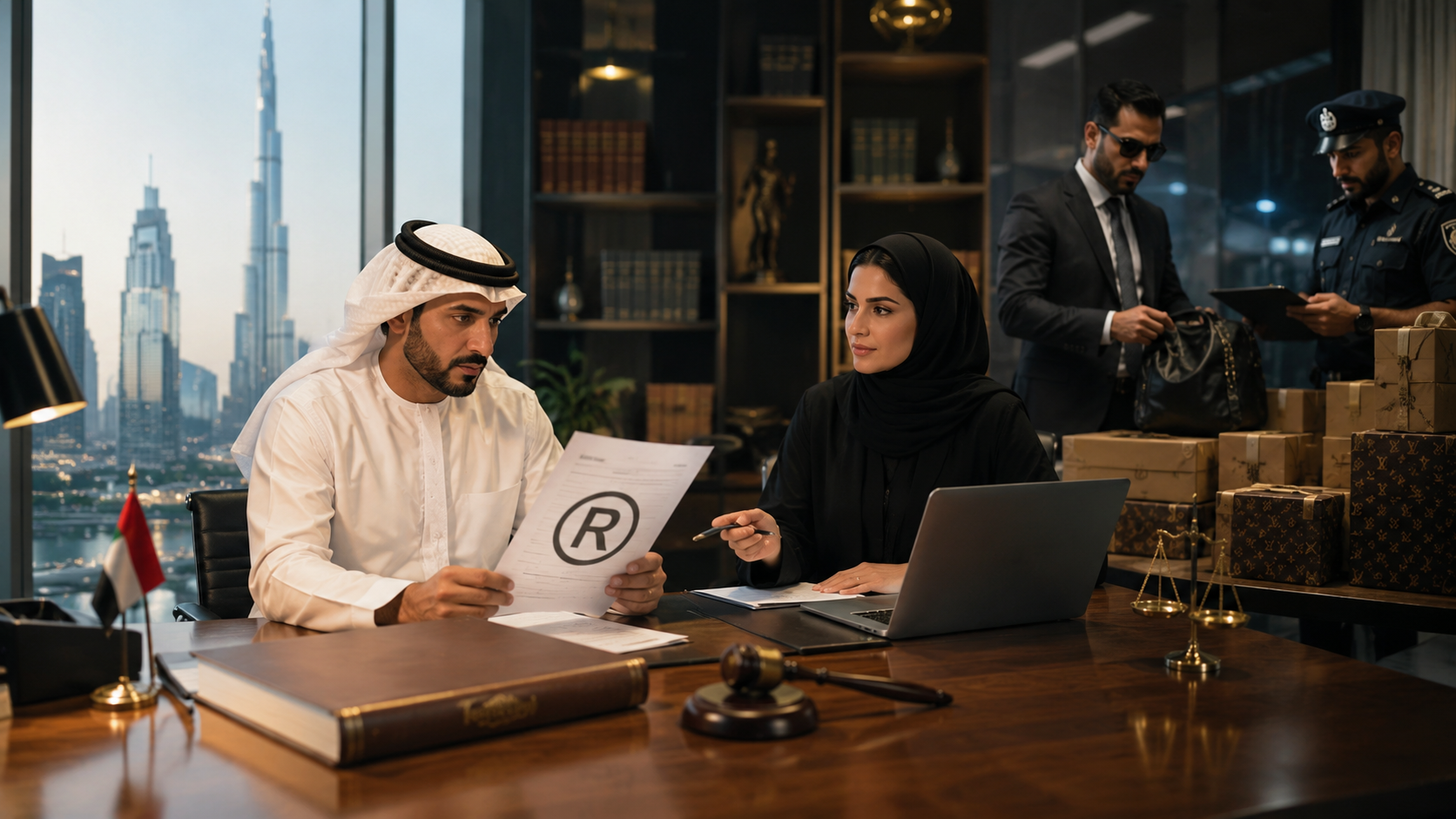
Intellectual property and trademarks in the UAE protect the most valuable things a company owns that never appear in its books: its name and logo, its innovative product, its design, its software and its content. Anyone looking for an intellectual property and trademark lawyer is usually in one of two situations: they want to register and protect their mark before someone else does, or they have discovered that someone has copied their mark or product and want to stop it.
The direct answer: a trademark in the UAE gains full protection only once it is registered with the Ministry of Economy and Tourism, and the same applies to patents and industrial designs, whereas copyright is protected as soon as the work is created, with deposit recommended to make proof easier. When infringement occurs there are several routes: opposing the registration, an action for cancellation or compensation, an administrative complaint against counterfeit goods, or a criminal complaint.
This guide from AWADH ALMHEIRI LAW FIRM AND LEGAL CONSULTATIONS follows the file as the brand owner experiences it: search and registration, then licensing and exploitation, then tackling infringement in the market, at the border and online, then litigation. All our specialised articles are collected under the category Intellectual Property.

What Does Intellectual Property Protect in the UAE?
Intellectual property has two branches: industrial property, covering trademarks, patents, industrial designs and trade secrets; and literary and artistic property, covering copyright in books, software, apps, designs, digital content, artistic and musical works, together with related rights. Each branch has its own federal law and its own registration and protection procedures.
A common mistake is to assume that the trade licence or the trade name registered with the economic department protects the logo. In fact, a trade name and a registered trademark are two different things, each with its own protection.
Before Registering a Trademark: The Clearance Search
The first step a trademark lawyer takes is not filing the application but searching for registered or pending similar marks in the same and neighbouring classes. An application that collides with an earlier mark is refused or opposed after the owner has already printed the logo and launched the product, and the owner may even face an infringement claim.
The review also covers choosing the right classes of goods and services, describing them precisely, and making sure the mark is distinctive rather than a generic description of the product, since descriptive and common marks are among the main reasons for refusal.
Registration Stages: Examination, Publication and Opposition
The application is filed online with the Ministry of Economy and Tourism, which examines it formally and substantively. The acceptance is then published so that any interested party may oppose it, and once the opposition stage passes without obstacle the mark is registered and its certificate issued. If the application is refused or accepted with conditions, the decision can be challenged by grievance and then before the competent court.
A registered mark is protected for ten years, renewable for similar periods; failing to renew exposes the mark to cancellation and opens the door for others to register an identical mark.
The Owner's Rights After Registration
A registered mark gives its owner the exclusive right to use it on the registered goods and services, to prevent others from using an identical or confusingly similar mark, and to dispose of it by sale, pledge or licence. The law also protects well-known marks even if they are not registered in the country, subject to conditions relating to their reputation among the relevant public.
This right rests on genuine use: a mark left unused for a long period without excuse may be cancelled at the request of others, so we recommend documenting actual use through invoices, advertising and dated photographs.
Read more in:
Patents and Industrial Designs
A patent protects a new technical solution capable of industrial application, and an industrial design protects the new external appearance of a product. Both are applied for at the Ministry of Economy and Tourism, and the novelty requirement is strict: publishing the invention or showing the product publicly before filing can destroy protection altogether.
Signing confidentiality agreements with partners, investors and manufacturers before disclosing the idea is therefore as important as the application itself, and it is the only protection for trade secrets, which cannot be registered.
Read more in:
Copyright, Software and Digital Content
The copyright and related rights law protects original works as soon as they are created, including software, apps, databases, designs, photographs, videos, books and music. Deposit with the Ministry of Economy and Tourism is not a condition of protection, but it is strong evidence of ownership and date in a dispute.
Among the most common files today are content copied on social media, images or music used in advertising without a licence, and music played in commercial premises without a licence from the competent collective management body.
Read more in:
Licensing and Franchising: Exploit Your Mark Without Losing It
You can grant others the right to use your mark, patent or content for a fee through a licence or franchise agreement. A good agreement defines the territory, term, exclusivity, quality standards, the right of control, and what happens to the mark and stock on termination, and the licence is recorded with the competent authority so it can be relied on against third parties.
Gaps in these clauses are what allow a licensee to behave like the owner after the agreement ends, or to register the mark in its own name in another country.
Read more in:
How Do I File a Complaint Against a Similar Trademark?
The route depends on the stage of the conflicting mark. If it is still a published application, the route is an opposition before the Ministry during the opposition stage. If it is already registered, the route is a cancellation action before the competent court based on your earlier mark, the registrant's bad faith or non-use. If the other party is using a similar mark in the market, a claim to stop the infringement and for compensation is added.
In all these cases the action is usually preceded by a carefully prepared formal notice, because many disputes end there with a written undertaking, and because it proves the infringer knew of your right.
Read more in:
Counterfeit Goods: Administrative Complaint, Customs and Criminal Complaint
If you find counterfeit products bearing your mark in the market, three routes are open and can be combined: a complaint to the commercial control authority of the emirate, which in Dubai is the Department of Economy and Tourism that seizes goods and imposes penalties; recording your mark with customs so counterfeit shipments are stopped at the border; and a criminal complaint, since counterfeiting a registered mark and selling counterfeit goods are offences under the trademarks law and the anti-commercial fraud law.
Read more in:
Online Infringement, Social Media and Domain Names
Much infringement is now digital: an account using your company's name, an online store selling counterfeit products under your name, or a domain identical to your mark. Each has its route: platform reports under their brand protection policies, the dispute resolution policy for domains ending in ae, and the criminal route in cases of impersonation or electronic fraud.
Read more in:
Who Owns What an Employee or Partner Creates?
Many disputes arise inside the company itself: an employee who developed software or a design and then left, or a partner who registered the mark in his personal name rather than the company's. The law sets rules on ownership of creations made in the course of employment, but the real answer lies in the employment contract, the shareholders' agreement and the articles of association, so we review these contracts and add assignment, confidentiality and non-compete clauses before a dispute arises.
Intellectual Property and Trademark Lawyer in Dubai
AWADH ALMHEIRI LAW FIRM AND LEGAL CONSULTATIONS provides full intellectual property services from Dubai: clearance searches and registration and renewal of trademarks, oppositions against similar marks and grievances against refusals, drafting licence, franchise and assignment agreements, pursuing complaints against counterfeit goods, and representing owners in cancellation, infringement and compensation actions before the Dubai Courts and the federal courts, as well as defending those accused of infringing another's mark.
Read more in:
What Should You Prepare Before Contacting the Lawyer?
Documentation
The mark or work
A clear image of the logo, name, product or content, and anything proving its creation date or first use.
Registration
Certificates and applications
The trademark registration certificate or application number, the trade licence, and any registration abroad.
Evidence
Proof of infringement
Photos and purchase invoices of counterfeit goods, and links to infringing accounts and sites with the date they were found.
Contracts
Licence and employment contracts
Licence, franchise or distribution agreements, and employee and partner contracts connected with the creation.
How Do You Verify a Lawyer’s Licence?
A lawyer appearing before the Dubai Courts must be registered under Federal Decree-Law No. 34 of 2022 regulating the advocacy and legal consultancy professions and licensed to practise in the emirate, and you can check the name in the directory on the website of the Government of Dubai Legal Affairs Department. Many trademark registration agents are not law firms: they file applications but cannot represent you in court when a dispute arises.
Ask for the name of the registered lawyer who will handle your file, not just the firm’s name, and make sure the power of attorney is issued in that lawyer’s name.
Legal References
Federal Decree-Law No. 36 of 2021 on Trademarks
Federal Decree-Law No. 38 of 2021 on Copyright and Related Rights
Federal Law No. 11 of 2021 on the Regulation and Protection of Industrial Property Rights
Federal Law No. 19 of 2016 on Combating Commercial Fraud
Federal Decree-Law No. 50 of 2022 Issuing the Commercial Transactions Law
Federal Decree-Law No. 42 of 2022 Issuing the Civil Procedure Law
Federal Decree-Law No. 34 of 2022 regulating the Advocacy and Legal Consultancy Professions

Frequently Asked Questions About Intellectual Property and Trademark Lawyers
Dubai
AWADH ALMHEIRI LAW FIRM AND LEGAL CONSULTATIONS in Dubai provides the services of an intellectual property and trademark lawyer: registering and renewing trademarks, opposing similar marks, protecting copyright and software, licence and franchise agreements, combating counterfeit goods, and litigating intellectual property disputes before the Dubai Courts.
Other Emirates
The firm also serves brand owners, creators and companies in Abu Dhabi, Sharjah, Ajman, Umm Al Quwain, Ras Al Khaimah and Fujairah in registering and protecting trademarks across the country, pursuing counterfeiting and infringement, and representing them in intellectual property disputes before the federal and local courts.