
 العربية
 Русский
 اردو
اردو
 中文
中文
 Français
New Wage Protection System Takes Effect on the First of Each Month
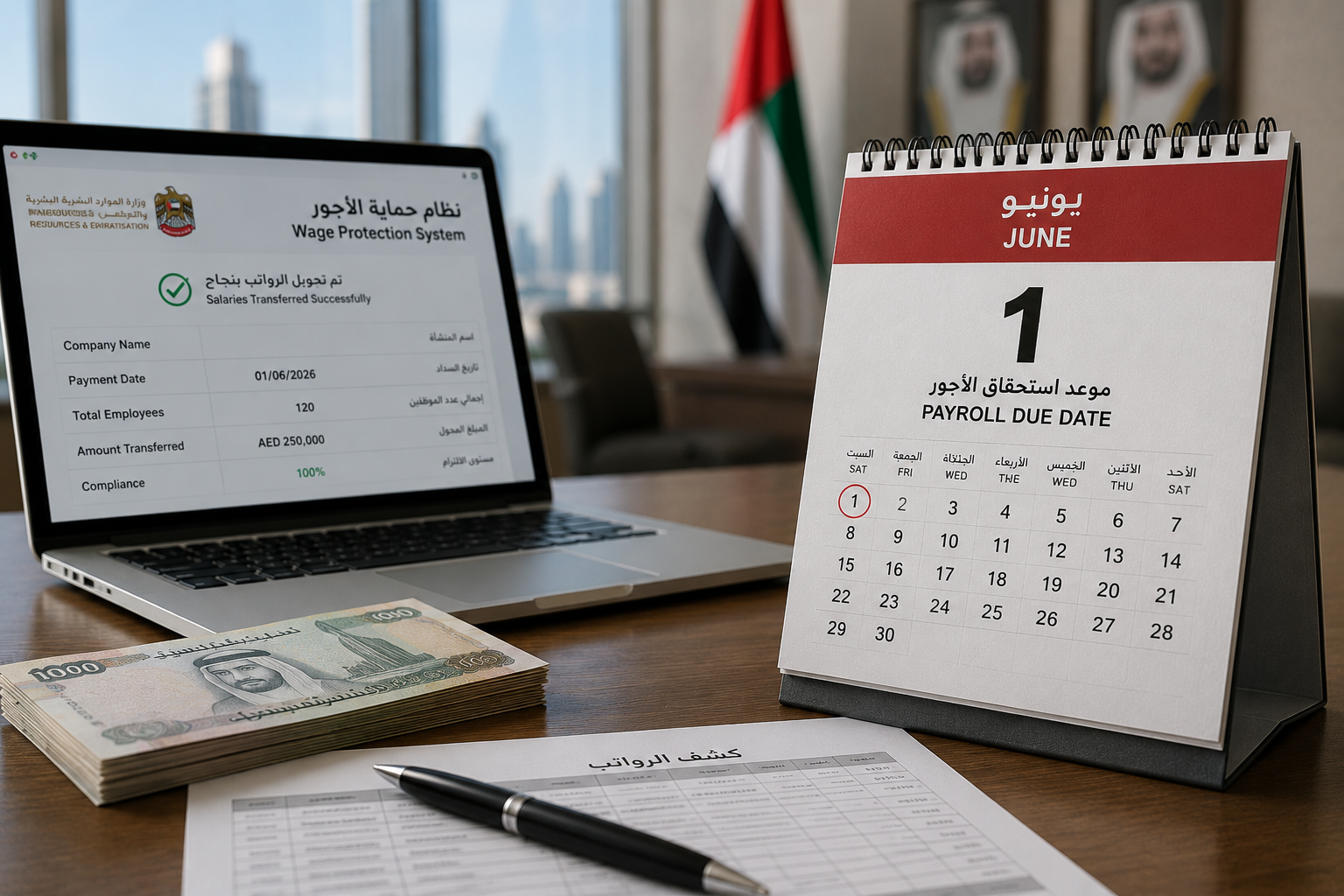
The new wage protection system has come into effect, after the Ministry of Human Resources and Emiratisation designated the first of each Gregorian month as a unified deadline for the payment of wages for workers in the private sector for the previous month, according to Ministerial Decision No. (340) of 2026.Any delay in wage payment after this date is considered a violation that necessitates the implementation of the prescribed measures against the establishment.
Wage Payment
The system requires all private sector establishments registered with the ministry to pay workers' wages through the Wage Protection System or any other systems approved by the ministry, while providing the documents and data that prove the completion of the payment process.
Monitoring and Follow-up Mechanism
The ministry has adopted a graduated monitoring mechanism to deal with establishments that are late in wage payments, as follows:
| Day from the due date | Action taken |
|---|---|
| Day two | Sending electronic alerts and notifications to the establishment |
| Day five | Suspending the issuance of new work permits and notifying the employer |
| Day eleven | Imposing administrative fines and transferring the establishment to the third category upon repeated violations within six months |
| Day sixteen | Registering labor disputes for affected workers and suspending work permits for targeted establishments |
| Day twenty-one and beyond | Referring violating establishments (50 workers or more) to the public prosecution, issuing executive bonds, imposing precautionary seizures, and preventing travel |
Tightening Measures Against Violating Establishments
Measures against establishments that exceed a delay of 21 days escalate to include:
- Referral of establishments employing 50 workers or more to the Public Prosecution upon repeated violations.
- Issuance of executive bonds for wage collection.
- Taking precautionary seizure measures against the establishment.
- Imposing a travel ban on the responsible party.
- Addressing the relevant authorities to take necessary legal actions.
The procedures for suspending work permits apply particularly to establishments that include25 workers or more, or those operating in the construction, transport, storage, security, cleaning, recruitment agencies, and domestic worker recruitment offices sectors.
Exceptions and delegation
The decision exempted several categories from being counted within the system, including:
- Workers who have labor disputes pending before the judiciary.
- Those reported for work interruption.
- Those on unpaid leave.
- Foreign workers who receive their wages outside the country from foreign establishments.
- Workers with temporary work permits not exceeding three months.
- Fishing boats and public taxis owned by citizens, as well as banks and places of worship.
The decision also allowed establishments the option todelegate other partiesto pay workers' wages, provided that the ministry is notified of the delegated party's details and the scope of its authority, while the establishment remains fully legally responsible for ensuring payment on time.
Do you need advice on compliance with the Wage Protection System?
Whether you are an employer or a worker who has experienced a delay in receiving your wage, the team atAwad Al-Muhairi Law Office and Legal Consultationsoffers you specialized advice in labor disputes and wage rights.
United Arab Emirates | All rights reserved