 العربية
 Русский
 اردو
اردو
 中文
中文
 Français
Supreme Committee Approves Dubai Sign Language Charter
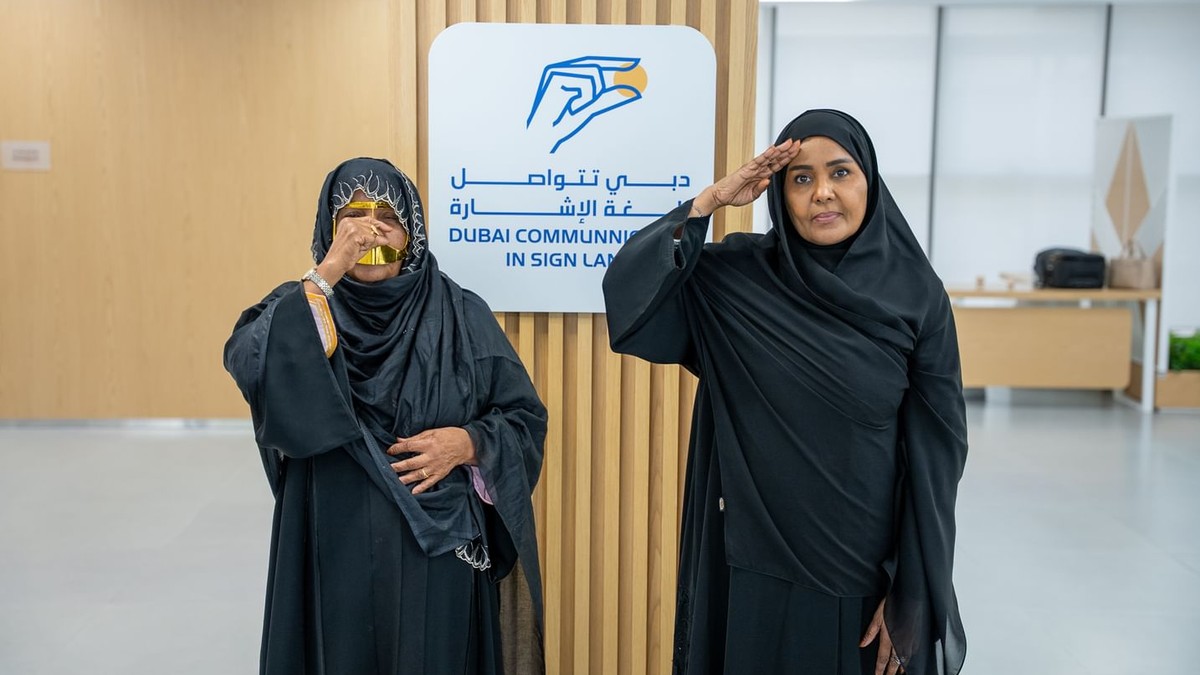
The Supreme Committee for the Protection of the Rights of People of Determination has approved the "Dubai Sign Language Charter for the Deaf and Hard of Hearing," under the supervision of the Community Development Authority in Dubai, coinciding with the Arab Deaf Week, with wide participation from government entities, in an initiative that is the first of its kind in the Emirate of Dubai and the UAE.
The approval of the charter reaffirms Dubai's approach to empowering people of determination by developing an integrated service system that ensures equitable access to information and services, enhancing their active participation in society, in line with the objectives of the "Dubai Social Agenda 33" and the Dubai Strategy for People of Determination.
What is the Dubai Sign Language Charter?
The charter serves as a guiding framework for regulatory frameworks and institutional practices, based on a set of fundamental principles:
- Recognition of Emirati Sign Language as an independent language with linguistic and cultural value.
- Ensuring inclusive communication without discrimination and preserving human dignity.
- Establishing institutional accountability and continuous improvement.
- Activating the practical application of relevant legislative provisions.
Her Excellency Hessa bint Issa Bouhamid, Director General of the Community Development Authority in Dubai, confirmed that the approval of the charter represents a strategic milestone in Dubai's journey towards establishing a globally leading model for accessibility, embodying the vision of wise leadership in building a more inclusive and sustainable community.
"The Dubai Sign Language Charter represents a comprehensive framework that translates our institutional commitment to ensuring the right to communication for the deaf and hard of hearing, and enhances the readiness of entities to provide comprehensive services based on innovation and efficiency."
Her Excellency Hessa bint Issa Bouhamid — Director General of the Community Development Authority in Dubai
Executive commitments across sectors
| Sector | Key commitments |
|---|---|
| Government entities | Providing sign language in all services, ensuring translation in priority interactions, developing inclusive digital channels, and training front-line staff. |
| Health and emergency sector | Providing translation at all stages of diagnosis, treatment, and emergency cases, ensuring full understanding before medical approvals, while protecting privacy. |
| Educational and social sector | Providing sign language from registration to evaluation, developing specialized academic programs in translation, and establishing a central registry for certified sign language interpreters. |
| Security, labor, and transport sectors | Providing translation in reports and investigations, creating supportive work environments without discrimination, and including the role of sign language interpreter within institutional structures. |
Service and community commitments
The charter also includes providing rehabilitation and protection services in sign language, training specialists, promoting a culture of communication and empowerment, as well as enhancing community initiatives that support people of determination in various aspects of life.
This charter enhances Dubai's status as a friendly city for people of determination and solidifies the emirate's approach to transforming intentions into actual practices that achieve a tangible impact on the quality of life for all community members.
Legal comment — Awad Al-Muhairi Law Firm and Legal Consultations
The United Arab Emirates is one of the most advanced countries in the region in terms of protecting the rights of people of determination at both legislative and institutional levels, having established a comprehensive legal system starting from Federal Law No. (29) of 2006 concerning the rights of persons with disabilities, through subsequent amendments and legislation that reinforced the principles of inclusion and non-discrimination.
The Dubai Sign Language Charter comes as a natural extension of this legislative path; however, it goes beyond the traditional legal framework towards a mandatory practical dimension that defines the mechanisms for effectively implementing the right to communicate across all sectors, representing a qualitative leap in translating legal texts into measurable and accountable institutional practices.
From a legal perspective, this charter establishes a fundamental principle that communication is an inherent right, not an optional facilitation, a principle that aligns with the United Nations Convention on the Rights of Persons with Disabilities ratified by the UAE, and enhances the country's position as a global model in inclusion and social integration legislation.